PCB Manufacturing Support for Companies in Vadodara
Vadodara has a strong base of electrical-equipment manufacturers, automation-system companies, engineering businesses and process industries. These businesses frequently depend on electronic control systems, monitoring equipment, sensor interfaces, power-control products and embedded electronic assemblies.
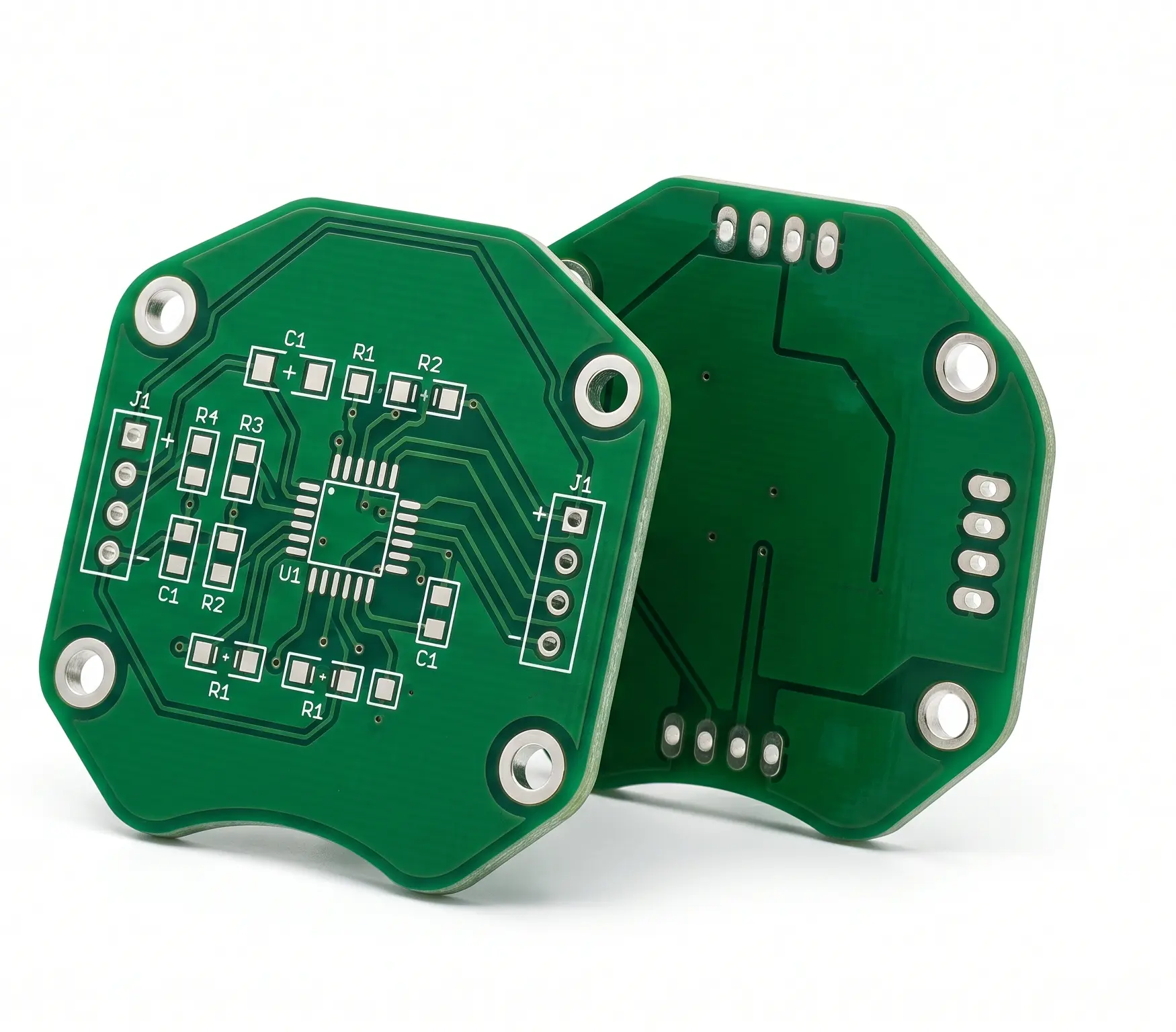
A dependable PCB supply partner is important because the printed circuit board forms the foundation of most electronic products. Errors in Gerber data, drill files, board dimensions, layer alignment or manufacturing specifications can lead to production delays, assembly problems and avoidable costs.
RAPID CIRCUIT supports Vadodara businesses with a structured PCB manufacturing workflow that can include:
- Gerber-file review
- PCB specification confirmation
- PCB CAM engineering support
- Prototype PCB manufacturing
- Single-layer PCB manufacturing
- Double-layer PCB manufacturing
- Multilayer PCB manufacturing
- Custom PCB fabrication
- Production PCB supply
- Panelization and routing support
- Final inspection and packaging
- Delivery support to Vadodara
Before manufacturing begins, customers should provide complete production data and confirm the required board specifications. Any technical questions or manufacturing concerns can then be clarified before the order enters production.
Why Vadodara Businesses Need Dependable PCB Manufacturing Support
Industrial electronic products often operate in demanding environments and may be used continuously for monitoring, control, protection or automation. PCB buyers therefore need more than basic board production. They need clear technical communication, careful file review, consistent manufacturing and reliable support from prototype development to repeat production.
PCBs for Electrical Equipment
Electrical-equipment manufacturers use printed circuit boards in a wide range of products, including:
- Electrical monitoring systems
- Protection and control equipment
- Power-control products
- Status-indication systems
- Metering equipment
- Control interfaces
- Power-supply products
- Testing and measurement systems
- Industrial communication equipment
The correct PCB construction depends on the electrical design, component density, current requirements, board dimensions, operating conditions and final application.
RAPID CIRCUIT can manufacture custom PCBs according to customer-provided Gerber files and approved technical specifications.
PCBs for Industrial Automation Systems
Automation companies require PCBs for machine controls, sensor interfaces, motor controls, communication devices and data-acquisition products.
Typical industrial automation applications may include:
- Programmable control products
- Machine-control systems
- Sensor interface circuits
- Motor-control electronics
- Industrial communication modules
- Automation control panels
- Data-logging equipment
- Remote-monitoring devices
- Industrial display systems
- Embedded control products
Prototype boards may be required during development and testing, followed by repeat production after the design is validated.
PCBs for Process Monitoring and Instrumentation
Process industries depend on instrumentation and electronic monitoring systems to measure temperature, pressure, flow, level, speed and other operating parameters.
Printed circuit boards may be used in:
- Process-monitoring equipment
- Industrial safety systems
- Sensor-conditioning circuits
- Data-acquisition products
- Alarm and indication systems
- Control-room equipment
- Remote-monitoring devices
- Measurement instruments
- Power and control electronics
For such requirements, buyers should clearly communicate the board specifications, operating conditions and expected production quantity before manufacturing begins.
PCB Support for Vadodara's Industrial Areas
RAPID CIRCUIT serves businesses located across Vadodara, including companies operating in and around major industrial areas such as Makarpura GIDC and Nandesari GIDC.
PCB requirements from Vadodara are coordinated through RAPID CIRCUIT’s manufacturing and technical operations in Rajkot, Gujarat, with dispatch arranged to the customer’s confirmed address.
PCB Services for Makarpura GIDC Businesses
Makarpura GIDC is home to engineering businesses, electrical-equipment manufacturers, machinery companies, control-panel businesses and automation-related industries.
Companies in this area may require custom PCBs for:
- Electrical control products
- Industrial automation systems
- Machine-control electronics
- Motor controllers
- Sensor interfaces
- Testing equipment
- Industrial displays
- Communication devices
- Monitoring systems
RAPID CIRCUIT can support Makarpura GIDC businesses with prototype PCB manufacturing, repeat production, PCB design assistance and manufacturing-data review.
Customers can share their Gerber files, drill files, board specifications and required quantity for technical review and quotation.
PCB Support for Nandesari GIDC Industries
Nandesari GIDC is strongly associated with process-based and industrial manufacturing activities. Businesses operating in such environments may require electronic systems for automation, instrumentation, monitoring, control and industrial safety.
Relevant PCB applications may include:
- Process-control instruments
- Monitoring and alarm systems
- Industrial sensor circuits
- Control-panel electronics
- Safety-monitoring equipment
- Power-management products
- Data-acquisition systems
- Industrial communication devices
PCB requirements for these applications should be evaluated according to the design, operating environment, electrical characteristics and expected production volume.
Serving PCB Buyers Across Vadodara
In addition to Makarpura and Nandesari, RAPID CIRCUIT can support PCB buyers located across Vadodara city and surrounding industrial areas.
Customers can submit production data and specifications electronically for review and quotation, with completed boards dispatched to the confirmed Vadodara delivery address.
Custom PCB Manufacturing
Custom PCBs are manufactured according to customer-provided production files and confirmed specifications.
The quotation and manufacturing process may consider:
- Board dimensions
- Number of layers
- Base material
- Board thickness
- Copper thickness
- Surface finish
- Solder-mask colour
- Legend colour
- Hole sizes
- Routing requirements
- Panel format
- Quantity
- Testing requirement
- Delivery schedule
Customers should ensure that their Gerber files, drill data and board outlines are complete and correspond to the latest approved design revision.
PCB Materials and Manufacturing Specifications
The appropriate PCB construction depends on the circuit design, electrical load, operating conditions, mechanical strength, heat dissipation, assembly process and cost target of the final product. RAPID CIRCUIT reviews the customer’s Gerber files and manufacturing specifications before confirming the material, board thickness, copper requirement, surface finish and profiling method.
Base Materials for Different PCB Applications
FR4 is commonly considered for industrial controls, automation products, double-layer boards and multilayer constructions that require dependable electrical insulation and mechanical strength. For suitable cost-sensitive single-layer applications, CEM-1, FR-1 and XPC paper-phenolic laminates may also be considered.
CEM-3 may be reviewed for technically suitable PCB constructions. Metal-core aluminium PCBs can be considered where heat dissipation is important, including selected LED-lighting and power-electronics applications. Material availability and suitability should be confirmed against the board design, thickness, quantity and manufacturing process.
PCB and Copper Thickness Selection
Board thickness affects mechanical strength, product fit, connector compatibility and the available space inside the equipment. Depending on the selected material and design, thickness options may include 0.4 mm, 0.8 mm, 1.0 mm, 1.2 mm, 1.6 mm, 2.0 mm, 2.4 mm and 3.2 mm. A 1.6 mm board is widely used, while thinner or thicker constructions may be selected for specific mechanical or product requirements.
Copper thickness is commonly specified by copper weight. Typical requirements may include 1 oz, approximately 35 μm; 2 oz, approximately 70 μm; and 3 oz, approximately 105 μm. Copper weight should be selected according to current-carrying requirements, track dimensions, thermal considerations and manufacturing feasibility.
Increasing copper thickness can affect achievable track width, spacing, hole plating and the overall manufacturing process. The copper requirement should therefore be reviewed together with the Gerber data rather than selected independently.
Solder-Mask and Legend Colours
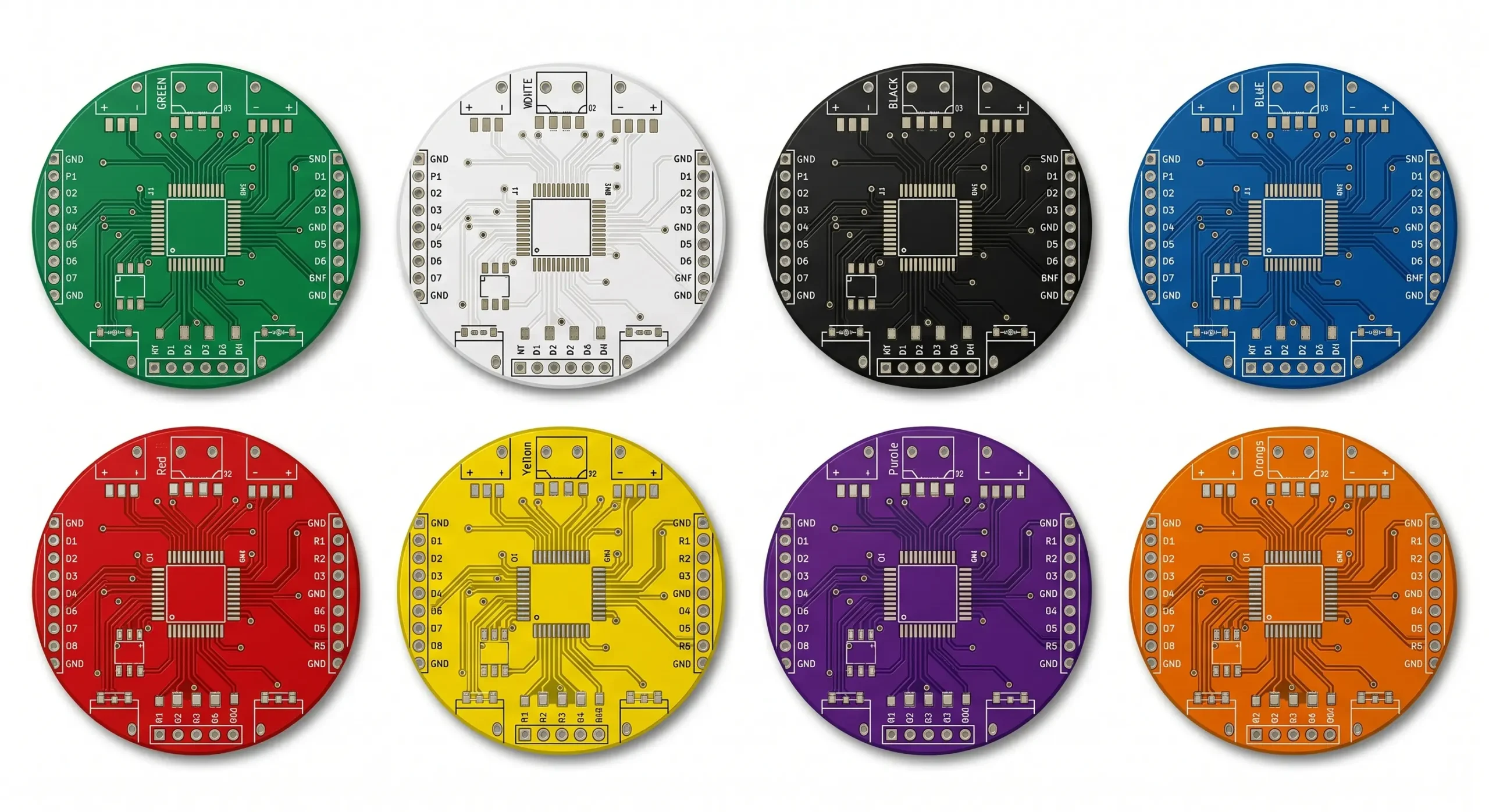
Solder mask protects the copper circuitry and helps reduce the risk of solder bridging during assembly. Green is commonly selected, while white, black, blue, red and other confirmed solder-mask colours may be available according to the material and production requirement.
The legend, also called the silkscreen, is used for component references, polarity markings, identification text and assembly information. White and black are commonly selected for clear contrast, while blue, red or other confirmed legend colours may be considered for specific product requirements. The colour combination should allow printed markings to remain readable against the solder mask.
PCB Surface-Finish Options
The surface finish protects exposed copper pads and provides a solderable surface for component assembly. Depending on the PCB type, application and confirmed production process, options may include roller tin, tin-lead HASL, lead-free HASL and OSP.
Protective lacquer may be considered for suitable single-layer or cost-sensitive applications, but it should be treated separately from solderable metallic finishes such as HASL. Customers requiring lead-free or RoHS-compliant PCBs should state the complete compliance and documentation requirements when requesting a quotation, because lead-free HASL alone does not confirm compliance of the complete PCB.
Board Profiling and Panel Separation
The PCB outline and delivery format influence the most suitable profiling method. CNC routing can be used for individual boards, internal slots and complex profiles. V-scoring, also called V-cutting, is generally considered for panelised boards with straight separation lines.
Precision punching may be suitable for compatible single-layer materials and repeat board profiles where the design, tolerances and quantity justify the process. The final method depends on the base material, board thickness, outline complexity, panel arrangement and dimensional tolerances.
Quotation guidance: When submitting Gerber files, mention the preferred base material, board thickness, copper thickness, surface finish, solder-mask colour, legend colour and board-profiling or panel-separation requirement. Availability and manufacturability should be confirmed during quotation.
Single-Layer PCB Manufacturing
Single-layer PCBs are commonly used in relatively simple electronic products where all conductive tracks are located on one side of the board.
Depending on the application and production method, single-layer boards may use FR4, CEM-1, FR-1, XPC or another confirmed material. CNC routing, V-scoring or precision punching may be considered according to the material, board profile, quantity and required dimensional tolerance.
They may be suitable for:
- LED products
- Power-control circuits
- Relay boards
- Indicator systems
- Basic control products
- Consumer electronics
- Electrical accessories
- Simple industrial devices
The appropriate material, copper requirement, solder mask and surface finish should be selected according to the application.
Double-Layer PCB Manufacturing
Double-layer PCBs contain conductive tracks on both sides and use plated through-holes to create electrical connections between the two layers.
FR4 is commonly considered for double-layer plated-through-hole boards, while selected CEM-3 constructions may be reviewed where technically suitable. Board thickness and copper weight should be confirmed according to the electrical, thermal and mechanical requirements.
They are commonly used in:
- Industrial control products
- Automation equipment
- Instrumentation
- Power electronics
- Communication devices
- Motor-control systems
- Embedded electronics
- Monitoring equipment
Double-layer construction provides more routing space than a single-layer board and may be suitable for designs with higher circuit density.
Multilayer PCB Manufacturing
Multilayer PCBs contain multiple conductive layers separated by insulating materials. They are generally used where the design requires higher circuit density, compact routing, controlled stack-up or additional electrical performance.
Multilayer PCBs may be used in:
- Advanced control systems
- Communication products
- Industrial computing equipment
- IoT devices
- Medical electronics
- Complex embedded products
- High-density electronic systems
Multilayer boards generally require a confirmed FR4 construction, layer stack-up, finished thickness, copper distribution and drill specification. These details should be reviewed together because changing one parameter can affect the overall board construction.
Layer count, stack-up, material selection, board thickness and manufacturing tolerances should be confirmed before production.
Bare PCB Production for Industrial Applications
RAPID CIRCUIT primarily supports customers requiring custom bare printed circuit boards manufactured according to their approved design data.
Before requesting a quotation, buyers should clarify whether they require:
- Individual PCBs
- Panelized PCBs
- V-cut panels
- Routed panels
- Breakaway tabs
- Edge rails
- Special board outlines
- Electrical testing, where included in the confirmed order scope
- Specific packaging instructions
Providing complete information at the quotation stage helps reduce technical questions and production delays.
Prototype PCB Support for Vadodara Product Development
Prototype PCBs help engineers and product developers evaluate a new electronic design before committing to regular production.
A prototype may be used to check:
- Electrical functionality
- Component footprint accuracy
- Mechanical dimensions
- Connector positioning
- Mounting-hole alignment
- Track routing
- Board outline
- Assembly compatibility
- Product enclosure fit
- Design revisions
From Gerber Data to Prototype Boards
A typical prototype PCB workflow includes:
- Submission of Gerber and drill files
- Confirmation of board specifications
- Review of manufacturing data
- Clarification of technical questions
- Preparation of quotation
- Customer approval
- PCB production
- Inspection and agreed testing, where included in the order scope
- Packaging and dispatch
Customers should always submit the latest approved design revision. If files are modified after quotation or technical review, the revised files should be clearly identified before production begins.
Prototype Support for Automation and Electrical Products
Vadodara-based electrical and automation companies may require prototype PCBs during:
- New-product development
- Design validation
- Functional testing
- Product improvement
- Replacement-product development
- Engineering trials
- Customer sample preparation
- Pre-production approval
After successful testing, the approved design can be considered for repeat or production quantities.
Quick-Turn PCB Requirements
Urgent PCB requirements should be discussed before order confirmation.
Actual production and dispatch time can depend on:
- Board type
- Layer count
- Material availability
- Board dimensions
- Quantity
- Surface finish
- Panel requirements
- Testing requirements
- Current production schedule
- Delivery method
Customers should mention their required delivery date while submitting the inquiry so feasibility can be checked.
Production PCB Support for Vadodara Manufacturers
Once a PCB design has been tested and approved, customers may require regular production quantities.
RAPID CIRCUIT can support repeat orders and production PCB requirements according to the approved manufacturing data.
Repeat Orders and Production Consistency
For repeat orders, customers should provide:
- Previous order reference
- Approved Gerber revision
- Current required quantity
- Any specification changes
- Required dispatch date
- Delivery address
If any design or specification has changed, the revised production files should be submitted and approved before manufacturing.
Maintaining clear revision control is particularly important for industrial products that may remain in production for several years.
PCB Supply for OEM and Industrial Requirements
Production PCB support may be relevant for:
- Electrical-equipment manufacturers
- Industrial automation companies
- Instrumentation businesses
- Control-panel manufacturers
- Machine builders
- Product-development companies
- Industrial OEMs
- Electronics solution providers
- Maintenance and retrofit businesses
The manufacturing plan should be based on actual consumption, production schedule, storage requirements and future design changes.
Planning Production Quantities
Before placing a production order, buyers should consider:
- Monthly or quarterly PCB consumption
- Minimum practical manufacturing quantity
- Inventory requirements
- Product demand
- Expected design changes
- Storage conditions
- Batch identification
- Delivery schedule
- Packaging method
A clear production plan helps reduce shortages, excess inventory and unnecessary repeat-order delays.
PCB Design and CAM Support
RAPID CIRCUIT also provides PCB design and CAM-related support for customers who need assistance before manufacturing.
PCB Layout Design Services
PCB layout design may include converting an approved schematic into a manufacturable board layout.
The design process can involve:
- Component placement
- Track routing
- Board-outline preparation
- Mounting-hole placement
- Copper-area planning
- Layer assignment
- Silkscreen placement
- Design-rule checks
- Manufacturing-output generation
Customers should provide complete schematic data, component details, mechanical constraints and design requirements before layout work begins.
PCB CAM and Manufacturing Data Review
PCB CAM work helps prepare customer-provided production data for manufacturing.
Depending on the project, the review may include:
- Gerber-layer identification
- Drill-file review
- Board-outline confirmation
- Layer alignment
- Hole-data verification
- Routing-data review
- Panel planning
- Manufacturing clarification
- Output-file checking
CAM review does not replace the customer's responsibility for electrical design approval. Customers should approve any requested modification before production.
Handling Design Revisions Before Production
If a manufacturing issue is identified, RAPID CIRCUIT may request clarification or revised data.
Customers should carefully review:
- Modified Gerber files
- Updated drill files
- Changed board outlines
- Panel arrangements
- Manufacturing notes
- Approved specifications
Production should begin only after the final data and specifications are confirmed.
Delivery Support for PCB Buyers in Vadodara
RAPID CIRCUIT is based in Rajkot and can arrange PCB dispatch to Vadodara after production and final inspection.
The delivery method may be selected according to:
- Shipment weight
- Package dimensions
- Delivery location
- Required delivery time
- Courier availability
- Transport preference
- Customer instructions
Production time and transport time should be treated separately. The total delivery schedule can be confirmed only after reviewing the PCB specifications, quantity and dispatch method.
Customers should provide a complete delivery address, contact number and any special transport instructions while confirming the order.
Why Choose RAPID CIRCUIT for PCB Requirements in Vadodara?
Support from Prototype to Production
Customers can work with RAPID CIRCUIT during different stages of a product lifecycle, from initial prototype boards to regular production quantities.
PCB Design, CAM and Fabrication Support
PCB layout, CAM preparation and manufacturing support can be coordinated through one service provider, helping reduce communication gaps between design and production.
Clear Technical Communication
Technical questions regarding Gerber files, drill data, dimensions or board specifications can be clarified before manufacturing begins.
Specification-Based Manufacturing
Orders are processed according to confirmed customer specifications rather than assumptions. Buyers should provide complete manufacturing information to receive an accurate quotation.
Support for Industrial PCB Requirements
The service is suitable for electrical equipment, automation systems, control products, instrumentation, industrial electronics and other custom applications.
Delivery to Vadodara
Completed boards can be packed and dispatched from Rajkot to the customer's confirmed address in Vadodara.
PCB Quality and Inspection Process
PCB quality begins with correct production data and clearly confirmed specifications.
A typical quality-focused workflow can include:
Manufacturing Data Review
Gerber layers, drill files, board outlines and production notes are checked for completeness and consistency before manufacturing.
Specification Confirmation
Important requirements such as material, thickness, copper, surface finish, solder mask, legend and quantity are confirmed.
In-Process Inspection
Boards are checked at relevant production stages to identify visible manufacturing problems.
Electrical Testing
Electrical testing may be carried out where it is included in the confirmed quotation and agreed order scope.
Final Visual Inspection
Completed PCBs are visually checked for issues such as:
- Solder-mask alignment
- Legend clarity
- Hole quality
- Board outline
- Surface-finish condition
- Visible scratches
- Routing quality
- Panel condition
Packaging and Dispatch
Boards are packed to reduce movement, contamination and physical damage during transportation.
Information Required for a PCB Quotation
To receive a quotation for PCB manufacturing and delivery to Vadodara, provide the following information:
- Gerber ZIP file
- NC drill file
- Board dimensions
- Number of layers
- Base material
- Board thickness
- Copper thickness
- Surface finish
- Solder-mask colour
- Legend colour
- Required quantity
- Individual board or panel delivery
- CNC routing, V-scoring, punching or other profiling requirement
- Edge-rail requirement
- Special technical instructions
- Delivery location
- Required delivery date
Complete data helps the technical team evaluate the requirement and prepare a more accurate quotation.
Frequently Asked Questions
How can a company in Vadodara request a PCB quotation?
Send your Gerber files, drill data, PCB specifications, required quantity and delivery location to RAPID CIRCUIT. The requirement can then be reviewed for pricing and manufacturing feasibility.
Can I send Gerber files online for a quotation?
Yes. Gerber files and related production data can be submitted electronically. The files should be provided as attachments or through the available quotation form.
Can you deliver prototype PCBs to Makarpura GIDC?
PCB orders can be dispatched to customers in Makarpura GIDC after manufacturing. The final delivery schedule depends on the board specifications, production time and transport method.
Do you support PCB requirements for industrial automation equipment?
RAPID CIRCUIT can manufacture custom PCBs based on customer-provided files for industrial automation, machine controls, sensor interfaces, monitoring systems and other electronic products.
Which PCB specifications are required for a quotation?
Provide the board size, layers, material, thickness, copper requirement, surface finish, solder-mask colour, legend colour, quantity, panel requirement and delivery location.
Which PCB materials, thicknesses and surface finishes can be reviewed?
Depending on the PCB design and confirmed manufacturing feasibility, materials may include FR4, CEM-1, FR-1, XPC, CEM-3 and metal-core aluminium. Board thicknesses may range from 0.4 mm to 3.2 mm, while common copper requirements include 1 oz, 2 oz and 3 oz. Surface-finish options may include roller tin, tin-lead HASL, lead-free HASL and OSP. Submit the complete specification for availability and feasibility review.
Can you manufacture single-layer and double-layer PCBs?
Yes. RAPID CIRCUIT provides single-layer and double-layer PCB manufacturing. Multilayer PCB requirements can also be reviewed according to the design and specifications.
Is PCB CAM support available before production?
PCB CAM and manufacturing-data review support is available. Any required file clarification or modification should be approved by the customer before production.
Can you support repeat-production PCB orders?
Yes. Customers can submit the approved design revision, previous order reference and current required quantity for a repeat-production quotation.
What affects the cost of custom PCB manufacturing?
PCB cost can depend on board dimensions, material, layer count, thickness, copper requirement, surface finish, hole sizes, quantity, panel format, testing requirements and production schedule.
How is PCB delivery to Vadodara arranged?
Completed PCBs are packed and dispatched from Rajkot to the confirmed Vadodara delivery address using a suitable courier or transport service.